
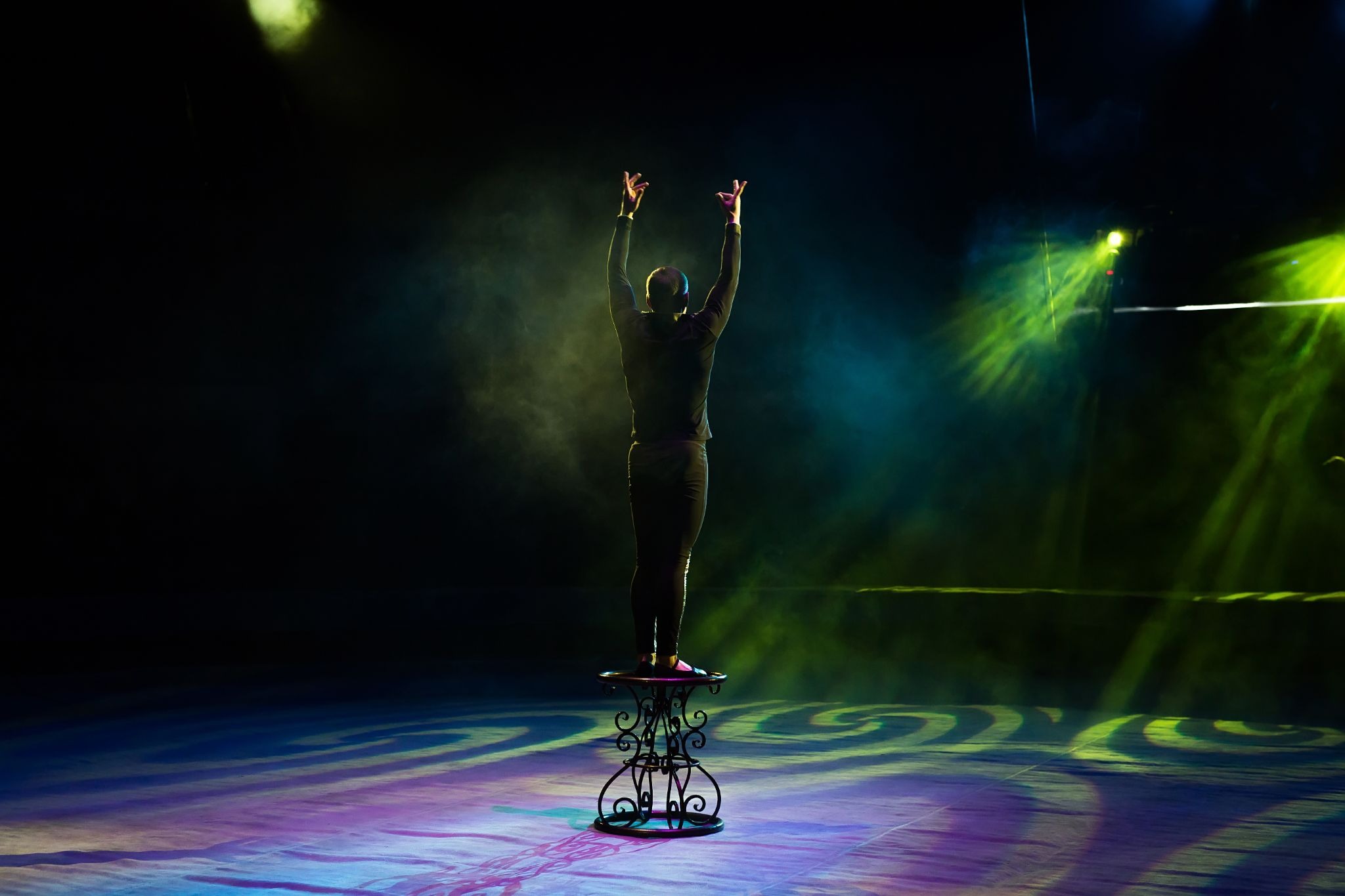
There is a moment in every great stage illusion when something happens that your brain flatly refuses to accept. A person disappears from a sealed box. A woman floats in mid-air with nothing visible holding her. A man walks through a solid steel blade and emerges smiling on the other side. In that moment, the rational mind and the witnessing eye enter a conflict that produces something rare and genuinely precious: pure, childlike wonder. Stage illusions are the art form built entirely around engineering that moment. They are not tricks in the dismissive sense. They are some of the most technically sophisticated, psychologically precise and theatrically powerful performances in all of live entertainment. Understanding how stage illusions actually work, without destroying the wonder but with genuine intellectual depth, is an exploration of human perception, engineering ingenuity, theatrical craft and the extraordinary lengths that performers go to in order to make the impossible seem inevitable. This guide takes you all the way in.
What Stage Illusions Actually Are: Defining the Art Form
Stage illusions are large-scale magical effects performed for live audiences, typically on a theatrical stage, that create the appearance of physically impossible events through a combination of mechanical apparatus, perceptual misdirection, theatrical staging and performance technique. They are distinguished from close-up magic, which operates at intimate distances with small objects, by their scale, their mechanical complexity and the theatrical production values that frame them.
The history of stage illusions as a distinct entertainment form traces back to the nineteenth century, when illusionists like Jean Eugène Robert-Houdin in France and John Henry Anderson in Britain began presenting magical performances in theatrical venues with full staging, elaborate costumes and theatrical narrative framing that elevated magic from street entertainment to respectable theatrical art. The golden age of stage illusion is widely considered to have occurred in the late nineteenth and early twentieth centuries, dominated by performers including Harry Kellar, Howard Thurston and the most famous magician in history, Harry Houdini, whose escapes and challenge acts were the defining spectacle entertainment of their era.
The Psychology of Deception: How the Brain Is Made to Believe
Before examining specific techniques, it is essential to understand the psychological foundation on which all stage illusions rest. Stage illusions do not work by fooling a passive brain that is simply failing to notice the method. They work by actively exploiting the specific ways that the human perceptual and cognitive system processes visual information, constructs reality and makes predictions about the physical world.
The human visual system does not record reality like a camera. It constructs a model of reality from a combination of sensory input and cognitive inference. The brain uses past experience, expectations and contextual cues to fill in gaps in sensory data and to make rapid predictions about what is happening in the environment. These predictive processes are extraordinarily efficient in normal circumstances because most of the time the world behaves as past experience predicts. But they create specific, exploitable vulnerabilities when confronted with situations engineered to feed misleading contextual information to the brain’s prediction system.
Gestalt Psychology and the Illusion of Completeness
Stage illusions also exploit a principle from Gestalt psychology: the tendency of the human perceptual system to perceive incomplete patterns as complete. When the brain receives visual information that is almost but not fully consistent with a known pattern, it completes the pattern rather than processing the anomaly. This principle, called closure in Gestalt terminology, means that a stage illusion does not need to be mechanically perfect. It needs to provide enough of the visual pattern of the impossible event to allow the brain’s completion system to fill in the rest convincingly.
The Mechanics of Levitation: How People Float on Stage
Levitation illusions are among the most iconic and emotionally powerful effects in stage magic, and they exist in multiple forms with different mechanical approaches appropriate for different performance contexts. Understanding the main mechanical approaches to levitation illuminates both the ingenuity of the apparatus and the theatrical strategy that makes the method invisible.
The most widely performed levitation in contemporary stage illusion is the Asrah levitation and its variants, in which a person appears to float freely in the air and then vanishes. The foundational mechanical approach involves a rigid framework concealed within or beneath a covering cloth, supported by a mechanism that is itself concealed by the performer’s body position, costuming and lighting design. The rigidity of the hidden framework allows the visible silhouette to maintain the appearance of a floating body while the actual support structure is never exposed to audience view.
The Zombie Ball and Object Levitation
Object levitation effects, in which inanimate objects float freely and move in response to gestures, use a different set of approaches. The classic zombie ball, a metallic sphere that floats beneath a silken cloth and rises, falls and moves in apparent defiance of gravity, typically employs a rigid mechanical armature concealed within the performer’s clothing and extending beneath the cloth, combined with dramatic gesturing that provides misdirection for the subtle mechanical movements required to animate the object. The performance of this effect at the highest level requires precise control of the armature combined with theatrical body movement that makes the mechanical gestures appear to be expressive performance rather than mechanical operation.
Sawing, Penetration and Transformation: The Mechanics of the Impossible
The sawing illusion, in which a person is apparently bisected by a saw or blade and then restored to wholeness, is one of the most enduring and dramatically powerful effects in stage magic. Its power comes from its apparent violation of physical and biological reality at the most visceral level. The audience watches something that their bodies understand cannot happen and that cannot have a happy outcome, and then it does. The emotional release of the restoration is one of the most theatrically satisfying moments in all of live performance.
The foundational mechanism of the sawing illusion in most of its forms involves the concealment of the full body within apparatus that appears to contain the performer in a specific configuration but actually provides hidden space for the body to position itself clear of the apparent penetration path. The most classic version uses a divided box with the performer’s body actually positioned differently inside than the external appearance of the box suggests, with removable panels and positioning that places the body clear of the saw’s actual path while creating the visual impression of vulnerability.
Disappearances and Transportation: The Art of Vanishing
Disappearance effects, in which a person or object vanishes from a visible position, are among the most dramatically versatile effects in the stage illusionist’s repertoire because the moment of vanishing is one of the most reliably astonishing things a live audience can witness. The engineering approaches to disappearances are more varied than any other category of stage illusion.
Trapdoor mechanisms, one of the oldest theatrical technologies, allow performers to descend rapidly from the stage surface to the space below the stage, creating instant disappearances from enclosed apparatus. The engineering precision required for modern trapdoor disappearances is considerable, with spring-loaded mechanisms that activate on precise cue and clear the stage surface rapidly enough to enable the performer to be completely below stage level by the time the apparatus door or covering is opened for the audience’s inspection.
Lighting, Staging and Production Design as Illusion Mechanisms
Stage illusions do not exist in isolation from the theatrical production that frames them. The lighting design, staging, sound design and production values that surround an illusion are not merely aesthetic enhancement. They are functional components of the illusion mechanism itself, without which the method would be exposed.
Lighting direction is perhaps the most critical production element for illusion function. A transparent monofilament support that is completely invisible to the audience when backlit becomes immediately visible when front-lit. A mirror surface that creates a convincing reflection illusion under carefully controlled lighting angles reveals itself instantly when a spotlight hits it at the wrong angle. Smoke effects are used not merely for atmospheric enhancement but to reduce visual acuity and prevent the resolution of fine detail at performance distances. Strobe lighting creates perceptual gaps in continuous visual experience that can conceal rapid mechanical transitions.
Final Thoughts
In an era of digital effects, photorealistic computer graphics and the most sophisticated cinematic spectacle in human history, the stage illusion remains something that no technology can replicate. It happens in the same physical space as the audience. There is no editing, no compositing, no digital manipulation of what the audience sees. The impossible happens in front of living, breathing human beings who are not watching a screen but sharing a space with a performer who is making reality do something it should not be able to do. That shared experience of genuine wonder, the collective gasp of an audience that has just witnessed something their minds refuse to accept, is one of the most powerful and humanizing experiences that live performance can create. Stage illusions are not simply entertainment. They are a reminder that the world still contains things that exceed our understanding, and that the experience of encountering the inexplicable is something worth protecting, performing and cherishing.