
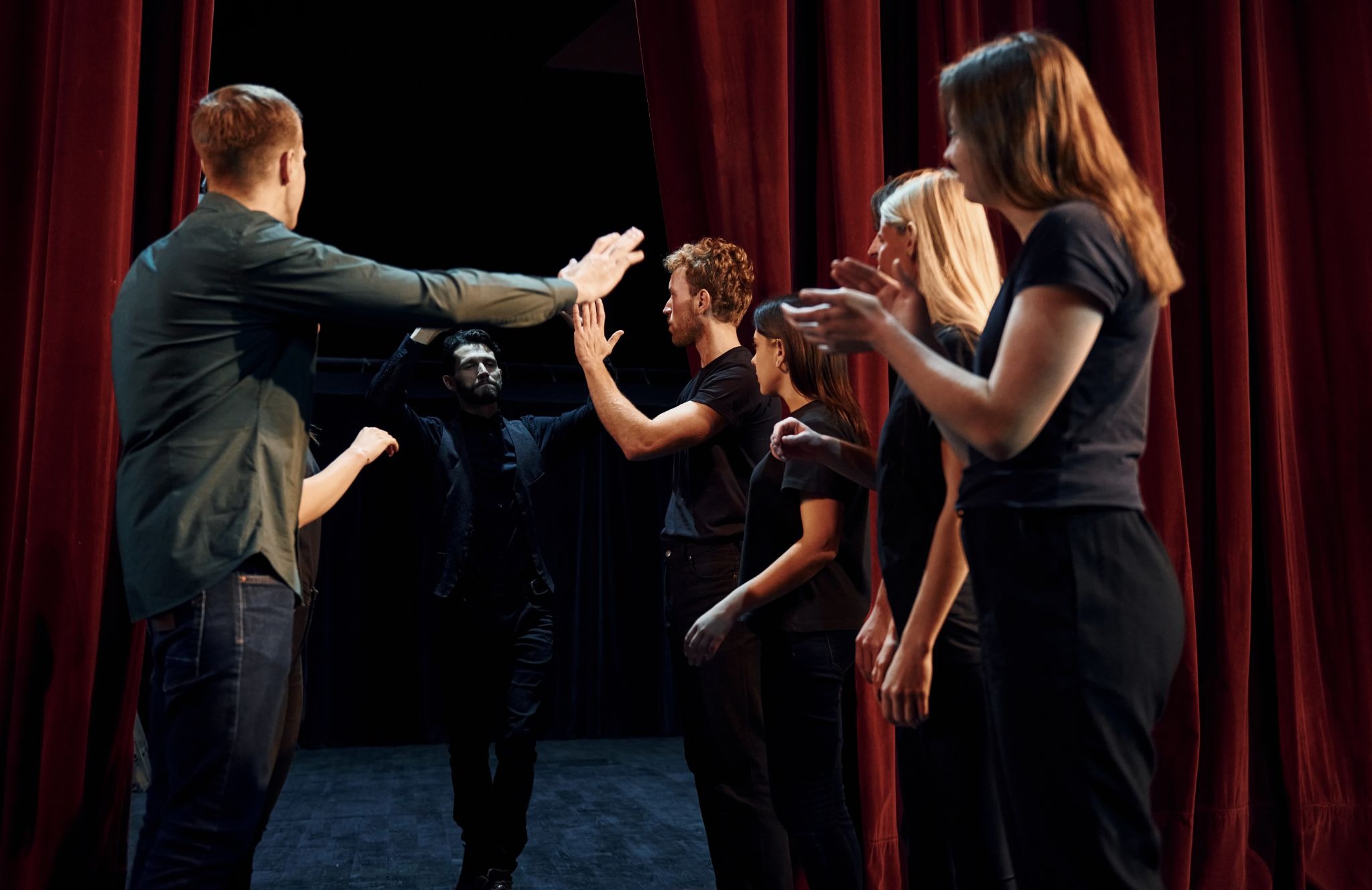
Every actor faces the same fundamental question: how do you make a performance feel real? The answer depends on who trained you and what tradition shaped your craft. Method acting and classical acting represent two distinct philosophies about where performance begins and how truth is found on stage or screen. They are not opposites. But they are built on very different assumptions about the actor’s job.
Method acting asks you to live inside the character. Classical acting asks you to master the art of portraying one. That single distinction changes everything, including how you prepare, how you rehearse, and how you show up on set or stage. Understanding both gives you a serious advantage, whether you are just starting out or looking to deepen your practice.
The Roots of Each Approach
Stanislavski and the Birth of Psychological Realism
Modern method acting traces back to Constantin Stanislavski, the Russian theatre director who spent decades developing a system for authentic performance in the early 20th century. His central idea was radical for its time: actors should not imitate emotion; they should genuinely experience it. He introduced concepts like emotional memory, given circumstances, and the “magic if,” asking actors to consider what they would do if they were truly in the character’s situation. Lee Strasberg later adapted Stanislavski’s work at the Actors Studio in New York. He pushed the psychological depth even further, developing what became known as Method acting with a capital M. Marlon Brando, Dustin Hoffman, and Al Pacino trained within this tradition and reshaped screen acting as a result.
The Ancient Craft: Where Classical Training Began
Classical acting has a longer, broader history. It draws from Greek theatre, Elizabethan stagecraft, and centuries of formal performance tradition. The goal was not psychological authenticity but theatrical precision.
Voice, diction, physical control, and textual analysis were the core skills. An actor’s body and voice were instruments. You trained them rigorously, then used them to serve the text, especially verse and heightened language.
This tradition found its modern home in institutions like the Royal Academy of Dramatic Art in London and similar conservatories across Europe. It shaped actors like Laurence Olivier, Judi Dench, and Ian McKellen.
How Method Acting Evolved from Classical Roots in the 20th Century
It is worth noting that Stanislavski himself never rejected classical technique. He built psychological depth on top of physical discipline, not instead of it.
The divide between method and classical grew sharper as American actors adapted his work and stripped away some of the technical rigour. The cultural moment mattered too. Post-war American cinema wanted rawness and vulnerability. Classical restraint felt dated on screen. Method acting filled that gap and became dominant in Hollywood by the 1950s and 1960s.
What Happens Inside the Actor’s Mind
The most important difference between these two approaches is not what audiences see. It is what is happening internally.
A method actor works from the inside out. Before a single line is spoken, they have already done significant psychological work. They research their character’s background, build an emotional life, and often stay in character between takes or scenes. The performance is an extension of a deeply inhabited inner state.
A classical actor works from the outside in. They analyse the text carefully, find the character’s objectives and tactics, and then express those choices through technical control. The emotion follows the structure. It is shaped and directed, not freely felt.
Neither approach is more honest than the other. Method actors are sometimes accused of self-indulgence. Classical actors are sometimes accused of being mechanical. Both criticisms miss the point when the technique is applied well.
What matters is intentionality. The best actors in any tradition know exactly what they are doing and why, even when it looks completely spontaneous.
How Each Technique Shapes a Performance
Embodying a Character from the Inside Out (Method)
Method actors often resist the idea of “performing” at all. For them, the goal is to become so psychologically present that the performance happens naturally.
This means extensive preparation before rehearsals begin. Research, personalisation, emotional recall, and improvisation are all common tools. Some actors build elaborate backstories that never appear in the script but deeply influence every choice made on stage or screen.
The upside is an almost magnetic authenticity. When it works, a method performance feels like you are watching a real person, not an actor. The downside is that it can be unpredictable and difficult to reproduce consistently. That is a real problem in theatre, where eight shows a week demand reliable delivery.
Sculpting a Character from the Outside In (Classical)
Classical actors approach a role more like a sculptor. They start with the text as their material and carve the character through technical choices, including voice, rhythm, physicality, and pacing.
This approach is highly repeatable. A classical actor can deliver the same performance night after night with precision because the choices are conscious and craft-based, not dependent on mood or emotional availability. It is also more collaborative. Directors and scene partners know what to expect. Adjustments can be made quickly because the actor is in control of each element separately. The challenge is warmth. A technically perfect performance can feel cold if the actor has not found genuine investment in the character’s emotional truth.
Voice, Body, and Text: The Classical Actor’s Primary Tools
Classical training places enormous emphasis on the actor’s physical and vocal instrument.
Breath control, resonance, articulation, and projection are trained over the years. The body is used expressively. Posture, gesture, and movement are all deliberate choices that communicate character and status. Textual analysis is equally central. A classically trained actor knows how to mine a script for subtext, understand verse structure in Shakespeare, and use punctuation as a performance instruction. The words are not just dialogue. They are architecture.
Rehearsal Rooms and Real-World Application
The differences between these approaches become most visible during rehearsal.
Method actors often want time to explore. They may resist locking in choices early and prefer to keep searching for truth through improvisation and experimentation. Experienced directors learn to build this into the schedule and to gently redirect when the exploration becomes self-serving. Classical actors are typically more efficient in the room. They come prepared with clear choices, respond readily to direction, and can adapt quickly to technical demands like camera angles and blocking changes. This makes them particularly valuable on tight production schedules. On a film set, classical technique often has a practical edge. Multiple takes, continuity requirements, and specific blocking demand consistency. A classically trained actor can hit their mark, deliver a precise emotional beat, and repeat it from a slightly different angle without losing the thread.
In theatre, especially with complex verse or large houses, classical technique is almost essential. The audience in the back row needs to hear and feel every word. Psychological truth alone will not reach them.
Which Approach Suits Which Medium?
The honest answer is that both approaches work in both mediums. The real question is which is more efficient for the specific demands you are facing. Film rewards intimacy and spontaneity. The camera captures micro-expressions and genuine reactions in a way that stage performance cannot. Method techniques such as emotional preparation, personalisation, and staying present are well suited to this. Many of the most celebrated film performances of the last 70 years came from method-influenced actors. Theatre rewards control and projection. The live audience, the acoustic demands, and the nightly repetition all favour classical technique. Even method-trained actors often shift their approach significantly when moving from screen to stage. Television sits somewhere in between. Long shooting days, fast turnarounds, and scripts that change daily mean that an actor who can prepare quickly and deliver reliably has a clear advantage. Many working TV actors draw from both traditions depending on the scene.
Do Actors Have to Choose a Side?
No, and the best actors rarely do. The method vs classical acting debate is largely a false binary. Most serious training programmes today integrate both traditions. You learn psychological depth and technical precision simultaneously because you need both. The danger of committing too completely to either camp is that you develop blind spots. A purely method actor may struggle with the technical demands of Shakespeare or musical theatre. A purely classical actor may produce brilliant technique that leaves audiences emotionally unmoved. The actors who consistently work at the highest level are technically fluent and psychologically engaged. They can switch between preparation modes depending on the project. They understand both traditions deeply enough to borrow from either without becoming dogmatic about either.
Conclusion
Great acting has never belonged to one school of thought. Whether you are drawn to the psychological depth of method acting or the disciplined precision of classical technique, both paths lead to the same destination: a performance that moves people. The smartest actors treat these traditions as resources, not rules. They borrow what serves the role and leave behind what does not. Your job is not to defend a technique. Your job is to tell the truth on stage or screen, using every tool available to you. The more tools you have, the better actor you become.